Rooted Strength Method - Strength you can use
Aug 15, 2026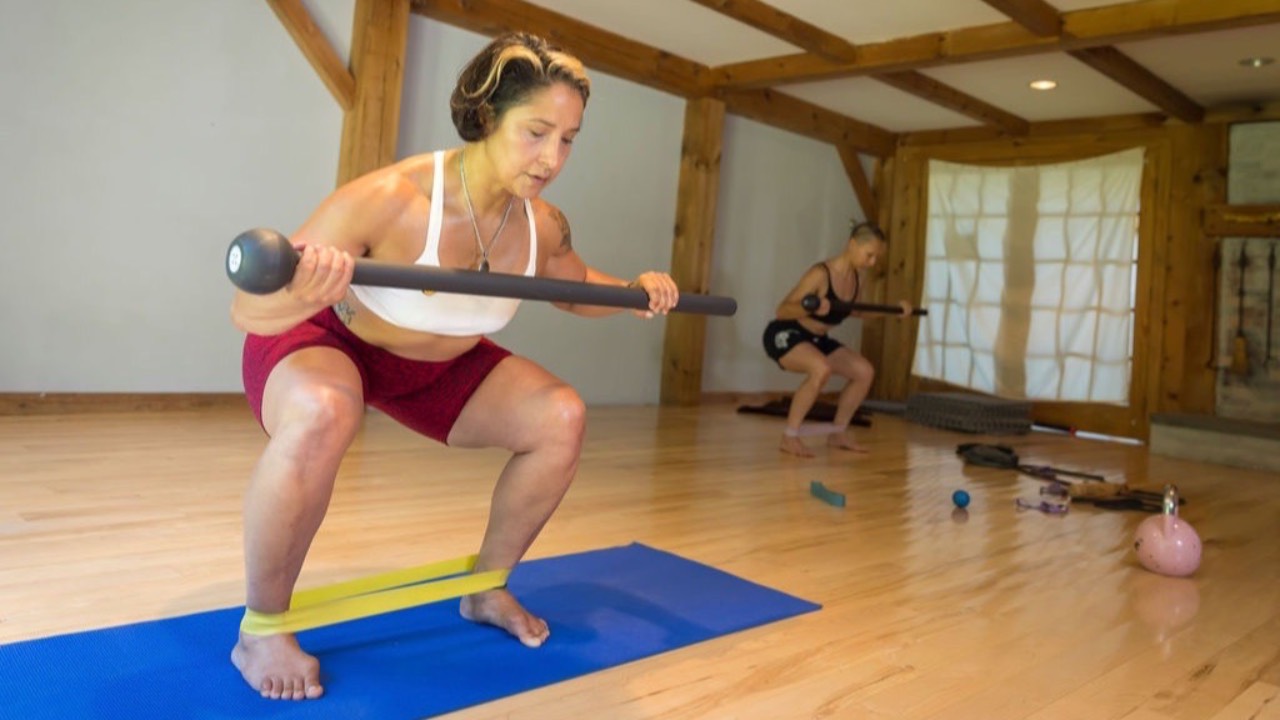
Training That Carries Into Striking, Grappling, Capoeira, Balance, and Transitions
Training with the Rooted Strength Method uses proper alignment and connection from the ground up, along with mechanics that feel reliable in any moment — whether that's everyday life or martial arts training.
FEET
We begin this whole process at the feet. This means working on how your feet feel the ground, since it's our main connection to the external world. Often neglected, our feet are a critical point of connection with our environment and with our body's capability to perform, from rooting to proper muscular engagement, moving up the whole chain. After all, as humans, we are built from the ground up.
BREATH
Next, we pay attention to the breath. Is it helping us stabilize and maximize power production? Or is it debilitating us because we're stuck in fight/flight/freeze, with our nervous system dysregulated and out of control? Breath brings awareness and presence — and presence, along with emotional control, is one of the most important pieces of performing in any martial art. Breath can also maximize engagement and explosive action in the body, especially when paired with pelvic floor awareness. Yes, men have pelvic floors too!
MOBILITY/FLEXIBILITY
Then we look at mobility — is the body able to move into the ranges we need for our everyday art and martial arts training? The body loses mobility when it isn't properly used. The brain literally tends to erase movement patterns it doesn't use — so if you never reach your arm overhead with a load, it forgets how, and that range becomes stiff. That's why every class includes a mobility component, from trigger point therapy to recover lost range, to passive and active movement work. Mobility also means moving through the correct path in your patterns — even the basic ones: proper alignment in squats, deadlift/hinge patterns, and muscle engagement during movement, with or without weight.
WEIGHT TRAINING WITH KETTLEBELLS AND STEEL MACE
This changes the game. Both tools are unbalanced and demand real awareness of your body, proper grounding through the feet, and breath to create stability. The best part? These tools can be used ballistically (swinging and controlling momentum), rotationally, and dynamically across different planes of motion. Martial arts rely on control of momentum for so much of what we do — kicking, punching, takedowns, Capoeira — all of it uses rotational force to produce power.
Kettlebells teach you explosive power production from the ground up, as well as stability and angles for standing up and getting down with control. Their shape demands that you stay properly engaged the entire time.
The Steel Mace is about proper engagement while unstable. Like martial arts, it's highly technical and requires patience and attention. Working with this tool helps bring the body into proper awareness and engagement — and it's humbling, because it targets the smaller muscle fibers used during longer training sessions, along with the tendons and ligaments.
Both tools engage breath and awareness differently, and both use neutral wrist control — building wrist strength and stability that carries directly into punches. These tools have been used by warriors since ancient times and remain a training modality that promotes longevity in the joints and the whole body. Life isn't lived in one plane of motion, and strength is about resilience in movement of all kinds — not just how much you can lift.
Thank you, warrior, and till next time.
Love,
Ana Carolina Lima, aka Morena